Online Bingo in Canada
How online bingo rooms work, what separates 75-ball from 90-ball, how many calls a pattern takes and what buying more cards really changes. The draw illustration and the explorers below show the math, with no money involved.
- Line
- Four corners
- Full house
- One line
- Two lines
- Full house
Call a ball, or let the illustration call them for you. Numbers on the card are marked as they come out.
Illustration only: one random card and a random draw of every ball, one at a time. No room, no other players, no money and no prizes.
- 75 balls in North American bingo, on a 5×5 card with a free centre square
- 90 balls in the 90-ball format, on a 3×9 ticket with 15 numbers
- 1 in 500 chance for any one card to complete a pattern first when 500 cards are in play
What online bingo is
Online bingo is the hall game on a screen. You buy one or more cards for a scheduled game, a random number generator (RNG) draws numbered balls one at a time, and the first card to complete the pattern for that stage of the game takes the prize. You play alongside everyone else in the room: the prize comes from the room, either as a share of the money spent on cards or as a fixed amount.
- 1
The cards
A 75-ball card is a 5×5 grid under the letters B, I, N, G and O, with a free square in the middle. A 90-ball ticket has three rows and nine columns, with five numbers in each row and 15 in all. Every card in the room carries its own mix of numbers.
- 2
The draw
The RNG draws the balls one by one, and a ball that has been called is not drawn again. Each call appears on screen as a ball, often with a recorded caller’s voice, and the software marks (daubs) the number on every card that has it.
- 3
The patterns
A 90-ball game has three stages: one line, two lines and a full house. A 75-ball game sets one pattern in advance, such as a line, four corners, a letter or the full card. Cards that complete on the same call usually share that stage’s prize.
75-ball or 90-ball: patterns and calls
Pick a format and a pattern. The card shows which squares count, and the panel shows how many calls one card needs to complete it, from games simulated in your browser. The slider at the bottom shows how much sooner the first full house comes when a room has many cards in play.
Each column draws from its own 15 numbers: B 1 to 15, I 16 to 30, N 31 to 45, G 46 to 60, O 61 to 75. The orange squares show one line; the blue outlines show a column and a diagonal, which count as lines too.
Column one holds 1 to 9, column two 10 to 19 and so on up to 80 to 90 in the last column. Each row has five numbers and four blanks.
Any line on one 75-ball card
Any of the 12 lines counts: 5 rows, 5 columns or 2 diagonals. The free centre square is already marked, so the middle row, the middle column and both diagonals need only four numbers.
Estimate from 5,000 simulated games with a new random card each time. Each bar covers three calls; the orange bar holds the median.
The first full house in a room
With 500 cards in play, the first full house in the room comes at a median of call 60 (by call 63 in 9 games out of 10). One card on its own needs a median of 74 calls.
Estimates, not results of any real game. The line and pattern figures come from simulation; the room figures are calculated exactly for cards with independent random numbers. Real 90-ball tickets are often sold in strips of six that hold every number once, which shifts the room figures slightly.
| 75-ball | 90-ball | |
|---|---|---|
| Balls | 1 to 75 | 1 to 90 |
| Card | 5×5 grid under B, I, N, G, O with a free centre square | 3 rows x 9 columns, five numbers and four blanks per row |
| Numbers per card | 24 | 15 |
| Column ranges | B 1-15, I 16-30, N 31-45, G 46-60, O 61-75 | 1-9, 10-19, 20-29 and so on, up to 80-90 |
| Prizes per game | One pattern set for the game: a line, four corners, a letter, a shape or the full card | Three stages: one line, two lines, full house |
| One card, full house | Median 74 of 75 calls | Median 87 of 90 calls |
| First full house, 500 cards in play | Median call 60 | Median call 61 |
Full house medians are exact for one card and for 500 cards with independent random numbers.
How an online bingo session works
Rooms run on a schedule rather than when you press a button. A session follows the same five steps whatever the format.
Pick a room and a budget
The room information shows the format, the card price, the start time, how the prize is set (a share of ticket sales or a fixed amount) and, where the room publishes it, the payout share. Decide how much you are prepared to spend before the first game.
Buy cards before the game starts
Cards are sold until the countdown ends, and many rooms let you buy for later games in advance. Rooms usually cap the number of cards one player can hold. In 90-ball rooms tickets often come in strips of six that hold every number from 1 to 90 once.
The numbers are called
Sales close and the RNG draws the balls one at a time at a set pace. Every card in the room is marked against the same calls.
Auto-daub marks your cards
The software marks every called number on every card you hold and usually sorts your cards by how many numbers each still needs. Auto-daub saves the clicking; it cannot change which numbers come out.
Every card is checked after each call
You do not have to shout or press anything. When a card completes the pattern, that stage ends and its prize goes to that card, or is split between all cards that completed on the same call. The game then moves to the next stage or ends.
Room maths: what more cards change
Every card in play has the same chance to complete a pattern first, so your chance is your share of the cards in the room. Move the sliders to see what happens as the room fills up or as you add cards: the chance and the cost move together, and the share the room pays back stays the same.
Your share of a room
Your 6 cards are 6 of the 500 cards in play, so they have 1.20% of the chances to complete the pattern first. The prize pool is 85% of all ticket sales, so on average every C$1 spent returns C$0.85 and the long-run cost is 15% of what you spend, however many cards you buy.
Your cards as the room fills up
- 100 cards in play 6.00%
- 250 cards in play 2.40%
- 500 cards in play 1.20%
- 1,000 cards in play 0.60%
- 2,000 cards in play 0.30%
More of your cards, same room
- 1 card costs C$0.25, average cost C$0.04 0.20%
- 3 cards costs C$0.75, average cost C$0.11 0.60%
- 6 cards costs C$1.50, average cost C$0.23 1.20%
- 12 cards costs C$3.00, average cost C$0.45 2.40%
- 24 cards costs C$6.00, average cost C$0.90 4.80%
Calculated, not simulated: with every card equally likely, the chance is your cards divided by all cards in play. When several cards complete on the same call and share the prize, this average does not change. Twice the cards means twice the chance and twice the cost; the average cost per dollar spent stays the same. The payout shares are examples, not the figures of any real room.
Payout share: what RTP means in bingo
Return to player (RTP) works differently in a bingo room than in a slot. In most rooms the prize pool is a set share of the money spent on cards for that game: if a room pays out 85%, C$85 of every C$100 in ticket sales goes back as prizes and C$15 stays with the room. With a fixed prize, the share depends on how many cards are sold, so it is low in a full room and higher in a quiet one. Some rooms publish their payout share in the room information or help screen. There is no single standard figure, so use the one the room states.
What the payout share means over a session
- 90% paid as prizes 10% kept by the room C$10.00
- 85% paid as prizes 15% kept by the room C$15.00
- 80% paid as prizes 20% kept by the room C$20.00
- 70% paid as prizes 30% kept by the room C$30.00
The figure is the long-run average kept from the total spent on cards, at four example payout shares. It is not a prediction: a single session can end well above or well below it. Money returned in one game and spent on cards again counts towards the total every time.
The main variants
Bingo studios run most of their rooms in the first two formats. The others trade the long game for smaller cards and faster rounds.
Three rows of nine columns, 15 numbers per ticket and three stages per game: one line, two lines and a full house. Tickets often come in strips of six that cover all 90 numbers.
A 5×5 card with a free centre and one pattern per game, from a single line to four corners, letters, shapes or the full card (blackout). The pattern is shown before the game starts.
A 4×4 card of 16 numbers, with lines, corners and a full house as the usual patterns. Fewer rooms run it than the two main formats.
50-ball and 30-ball games use smaller cards, and mobile variants call the balls in quick bursts. Games are shorter, so more of them fit into the same time, and the same budget runs out sooner.
Single-player games that borrow the bingo card but run like a slot: the RNG decides each round on its own and the RTP is fixed in the help screen. They are a different product from room bingo.
Charitable, provincial and online casino bingo
Bingo in Canada comes in three forms, run by different organisations and, in Ontario, with different minimum ages.
| Charitable hall bingo | Provincial lottery platforms | Online casinos in Ontario and Alberta | |
|---|---|---|---|
| Who runs it | Licensed charities, often in shared bingo and gaming centres; part of the proceeds goes to local charities | The province’s lottery corporation | Private operators registered with the provincial regulator |
| Where you play | In person, on paper cards or electronic devices (eBingo) | Online, where the province’s platform offers bingo; line-ups differ by province | Online, in rooms supplied by bingo studios and often shared by several sites (network rooms) |
| Minimum age | 18+ in Ontario; set by each province elsewhere | The province’s online age: 19+, or 18+ in Alberta, Manitoba and Quebec | 19+ in Ontario, 18+ in Alberta |
Ontario ages as stated by OLG’s PlaySmart site: 18 or older for lottery and charitable gaming, 19 or older for online casino gaming. Other provinces set their own ages for bingo halls.
Chat rooms
- Part of many rooms
Online bingo rooms usually have a chat window next to the game, and some have a chat host who welcomes players and keeps the conversation going. Using it is optional, and the game runs the same with the chat closed.
- No effect on the draw
What is said in the chat, and how many people are talking, does not change the numbers called or any card’s chance.
- Room rules apply
Rooms usually set rules of conduct for the chat, and moderators can mute or remove players who break them. Never share account or payment details in a chat.
- Keep your limits in view
A friendly room can make time pass quickly. Deposit and time limits in your account apply while you chat, the same as at any other time.
Random draws: what matters and what does not
- Every card has the same chance
No number on a card is lucky or unlucky. The RNG draws each remaining ball with the same probability, so before the first call every card in the room is equally likely to complete first.
- Past games do not count
Each game starts with the full set of balls. A number that has not come up for several games is no more likely in the next one.
- Fast full houses are rare
A prize that needs a full house within a set number of calls is hard to reach: one 90-ball ticket completes all 15 numbers within 50 calls about once in 20,000 games, and within 40 calls about once in 1.1 million.
- Testing
Reputable bingo studios have their RNG checked by independent testing labs. In regulated provinces, games offered by registered operators must meet the regulator’s technical standards.
What bingo looks like
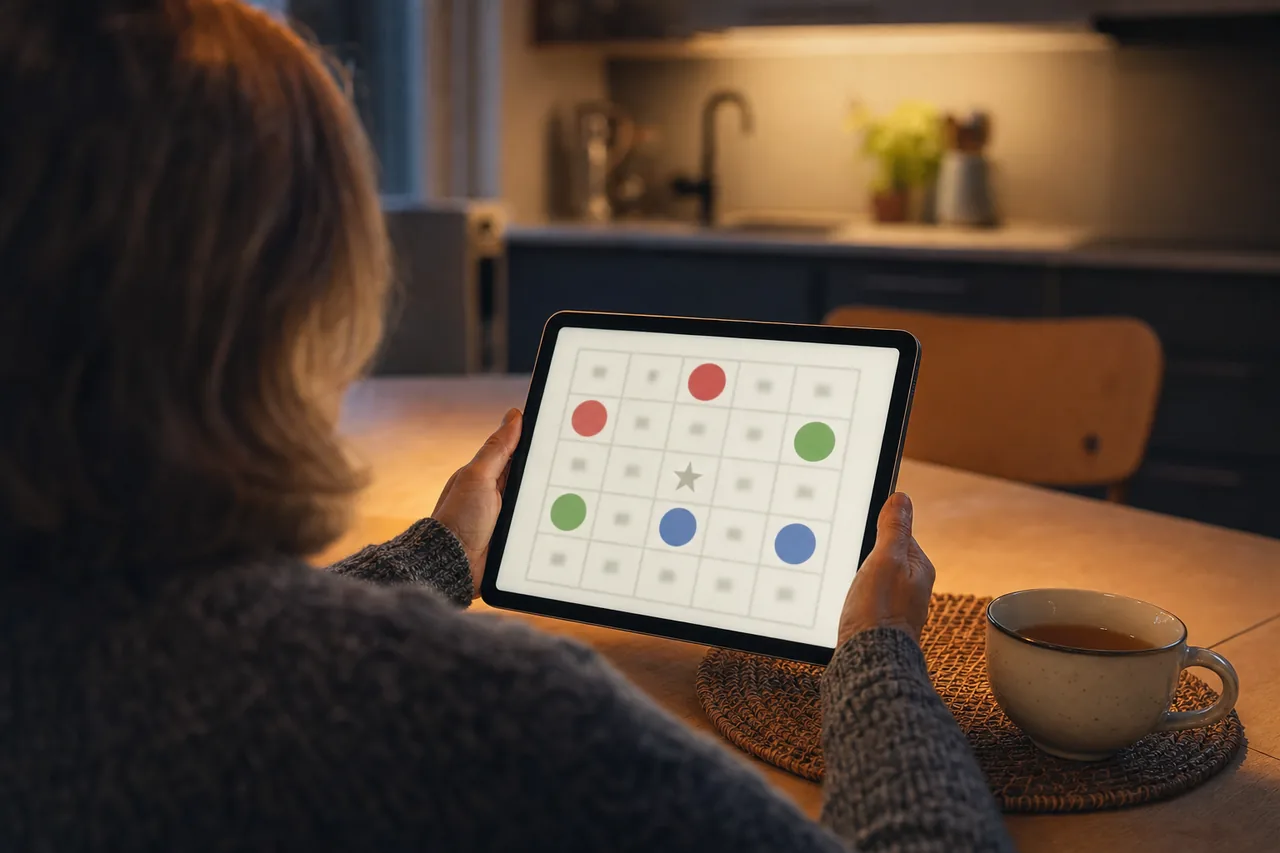
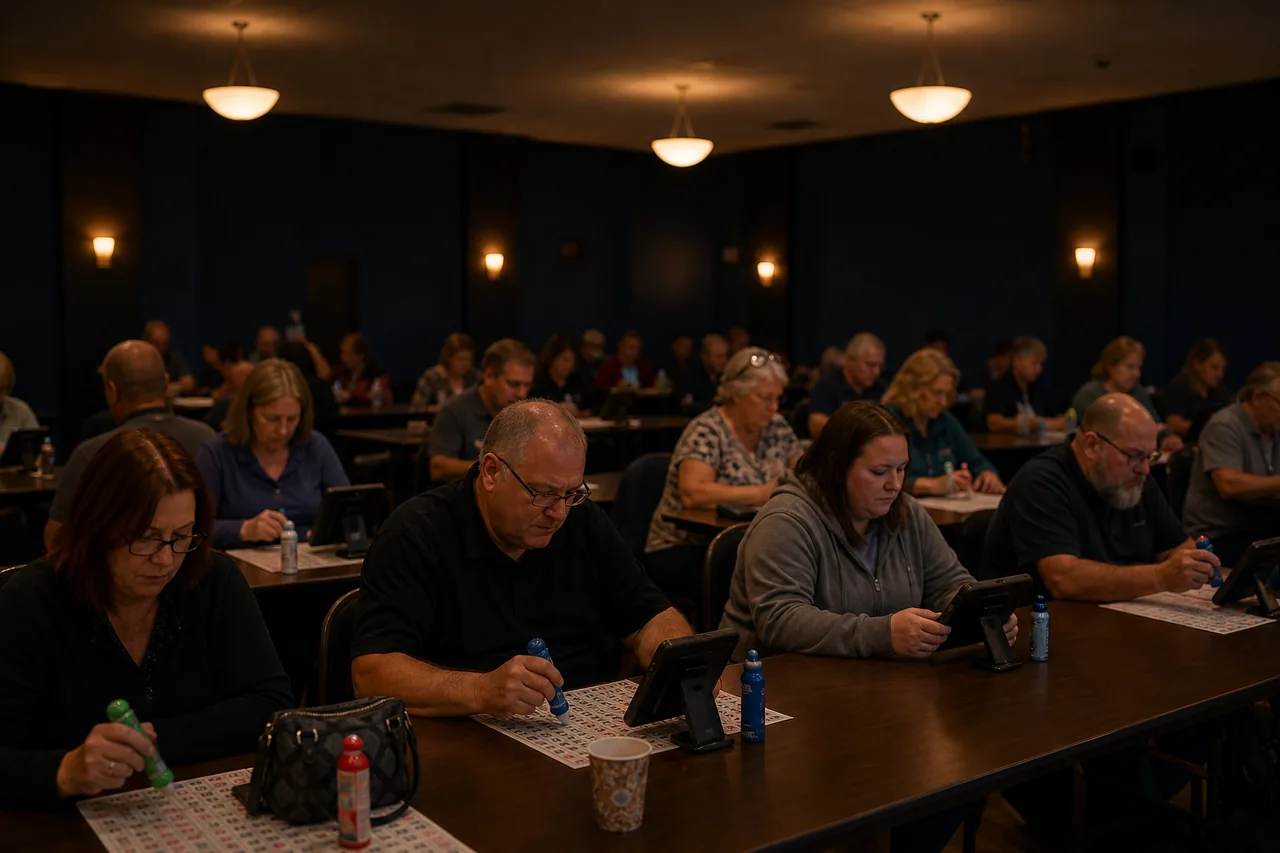
Online bingo rooms have no play-money version on the studios’ own websites, so these are AI-generated illustrations of typical bingo halls and screens. Real rooms differ in layout and decor.

Is online bingo legal in Canada?
It depends on your province. Under the Criminal Code only a provincial government can conduct and manage online gambling, so each province decides who may offer games such as online bingo. Ontario has run an open market of registered private operators since 4 April 2022, and Alberta opened its own on 13 July 2026. Most other provinces offer online games through a single Crown platform, and the territories have no online casino platform. Our guide Are online casinos legal in Canada? covers each province, its regulator and its minimum age.
Frequently asked questions
Play within your limits
Bingo is a game of chance: the room keeps a share of what is spent on cards, and more cards cost more without changing that share. Set a time and money limit before you start and treat any spend as the cost of entertainment. 19+ (18+ in Alberta, Manitoba and Quebec); charitable bingo and lottery products in Ontario are 18+. Free, confidential help: ConnexOntario 1-866-531-2600, and every province’s helpline is on our responsible gambling page.