Online Blackjack in Canada
How a hand of blackjack works, what the dealer has to do, and how basic strategy and the table rules set the house edge. Deal an example hand to see the basic strategy decision for it, then try the chart and the rules calculator below.
Against this upcard the hand loses more than half the bet on average, so giving up half the bet costs less than playing on. Where surrender is not offered, hit.
Illustration only: two cards for you and the dealer’s upcard from a freshly shuffled eight-deck shoe, with the basic strategy decision. No bets, no money and no result.
- 0.43% house edge with basic strategy: 8 decks, 3:2, dealer stands on soft 17
- 6:5 blackjack payout that adds about 1.4 points to the house edge
- 4.7% chance of a two-card blackjack in an eight-deck game, about 1 hand in 21
What online blackjack is
Blackjack is the casino card game in which you try to finish closer to 21 than the dealer without going over. Online, the cards come either from a random number generator (RNG) or from a real dealer streamed from a studio. Unlike roulette, you make decisions during the hand, and those decisions change how much the game costs you on average.
- 1
The goal and the payouts
You play against the dealer, not against other players. A higher total than the dealer pays 1 to 1, equal totals are a push and the stake comes back. Going over 21 is a bust and the bet is lost at once, even if the dealer busts later. A blackjack, an ace and a 10-value card as the first two cards, pays 3 to 2 at a standard table.
- 2
Card values
Cards 2 to 10 count their number. Jacks, queens and kings count 10. An ace counts 1 or 11, whichever suits the hand. A hand with an ace counted as 11 is soft (ace and 6 is soft 17); every other hand is hard. Suits play no part.
- 3
The dealer’s rules
The dealer makes no choices: they draw until they reach 17 or more. Tables differ on soft 17, where the dealer either stands or hits. The rule is printed on the table felt or in the help screen, together with the blackjack payout.
How a round works
RNG and live tables follow the same order. At an RNG table you start each hand yourself; at a live table betting and decisions run on a timer.
Place a bet
Put a stake within the table minimum and maximum on one box, or on several boxes at a multi-hand table. Decide in advance how much you are prepared to spend.
The deal
Each box gets two cards face up. The dealer gets one card face up, the upcard, and at most tables a second card face down, the hole card.
The dealer checks for blackjack
With an ace showing, you are offered insurance first. With an ace or a 10-value card showing, the dealer checks the hole card; a dealer blackjack ends the round straight away. At European no-hole-card tables there is no check.
You play each hand
Hit, stand, double down, split a pair or, where offered, surrender. You finish one box before moving to the next.
The dealer plays
The dealer turns the hole card and draws by the fixed rule until reaching 17 or more, or busting.
Bets are settled
Each box is compared with the dealer’s hand and paid at the fixed odds, pushed or collected. Many RNG tables reshuffle the virtual shoe before the next hand, so earlier hands have no effect on it; the help screen says how the game handles the shoe.
Your options in a hand
These five decisions are where basic strategy comes in. Doubling and splitting add a second stake equal to the first, so they raise the amount at risk on that hand.
Take another card. You can keep hitting until you stand or go over 21.
Keep your total and end your turn for that hand.
Double the stake on your first two cards and take exactly one more card. Some tables only allow it on totals of 9 to 11 or 10 and 11.
Two cards of the same value become two hands, each with its own stake. Split aces usually get one card each, and an ace and a 10-value card after a split count as 21, not as blackjack.
Give up the hand after the first two cards and lose only half the stake. Late surrender, after the dealer checks for blackjack, is the usual form. Not every table offers it.
Basic strategy chart: the best play for every hand
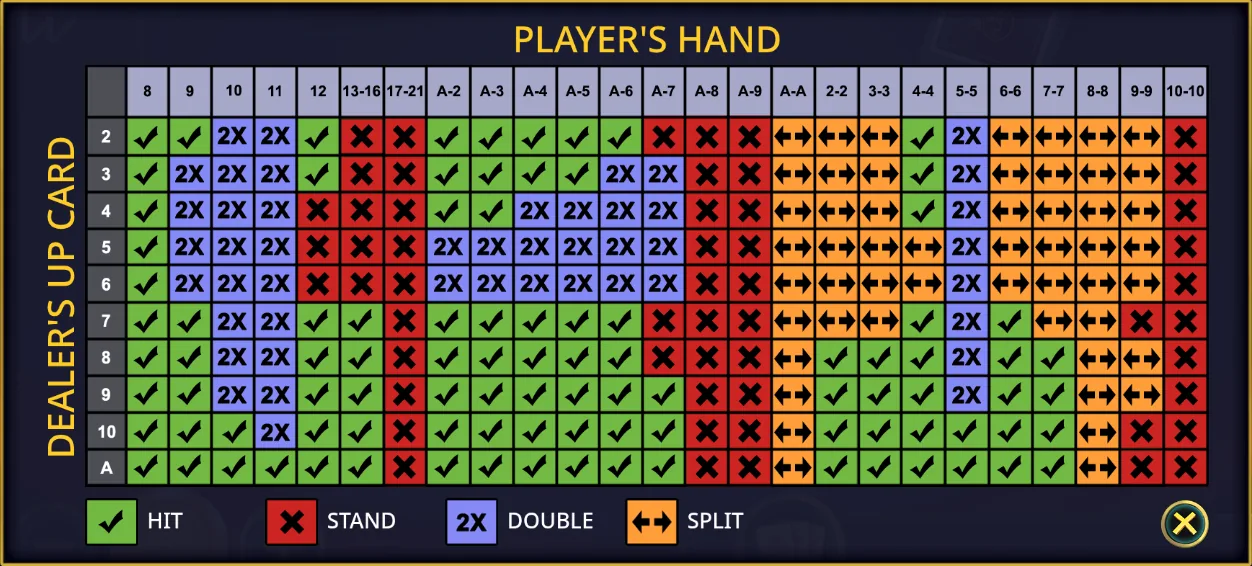
Basic strategy is the decision with the lowest average cost for every combination of your two cards and the dealer’s upcard, worked out by computer over millions of hands. It brings the house edge down to the minimum for the table’s rules. It does not remove it. Pick a hand and an upcard, or click any cell of the chart.
Rule set: 6 to 8 decks, dealer stands on soft 17, double on any first two cards, double after split allowed, late surrender where offered.
| You | 2 | 3 | 4 | 5 | 6 | 7 | 8 | 9 | 10 | A |
|---|---|---|---|---|---|---|---|---|---|---|
| 5-8 | ||||||||||
| 9 | ||||||||||
| 10 | ||||||||||
| 11 | ||||||||||
| 12 | ||||||||||
| 13 | ||||||||||
| 14 | ||||||||||
| 15 | ||||||||||
| 16 | ||||||||||
| 17+ |
| You | 2 | 3 | 4 | 5 | 6 | 7 | 8 | 9 | 10 | A |
|---|---|---|---|---|---|---|---|---|---|---|
| A,2 | ||||||||||
| A,3 | ||||||||||
| A,4 | ||||||||||
| A,5 | ||||||||||
| A,6 | ||||||||||
| A,7 | ||||||||||
| A,8 | ||||||||||
| A,9 |
| You | 2 | 3 | 4 | 5 | 6 | 7 | 8 | 9 | 10 | A |
|---|---|---|---|---|---|---|---|---|---|---|
| 2,2 | ||||||||||
| 3,3 | ||||||||||
| 4,4 | ||||||||||
| 5,5 | ||||||||||
| 6,6 | ||||||||||
| 7,7 | ||||||||||
| 8,8 | ||||||||||
| 9,9 | ||||||||||
| 10,10 | ||||||||||
| A,A |
- H Hit
- S Stand
- D Double, otherwise hit
- Ds Double, otherwise stand
- P Split
- R Surrender, otherwise hit
Hard 16 against a 10
Against this upcard the hand loses more than half the bet on average, so giving up half the bet costs less than playing on. Where surrender is not offered, hit.
The chart gives the lowest average cost for each decision. It does not change the cards: every hand is still a game of chance and the house keeps its edge.
How the table rules change the house edge
Two blackjack tables can look the same and cost very different amounts. Switch the rules below to see the house edge with basic strategy for that combination, using published figures for games that reshuffle before every hand, as many RNG blackjack games do.
House edge with basic strategy
8 decks, 3:2 blackjack, dealer stands on soft 17, double after split, no surrender, dealer checks for blackjack.
With good rules and basic strategy the edge drops below 1%, but it never reaches zero: the game always keeps a margin on the total amount bet.
What the house edge costs over a session
- The rules you picked above 0.43% house edge C$2.16
- 8 decks, 3:2, dealer stands on soft 17 0.43% with basic strategy C$2.16
- The same table paying 6:5 1.79% with basic strategy C$8.95
- European roulette, for comparison 2.70% on every bet C$13.51
The figure is the long-run average the game keeps from the total amount bet, assuming basic strategy on every hand. It is not a prediction: a single session can end well above or well below it. Money that is bet again counts towards the total every time it is bet, and doubles and splits add to it.
| Rule | Effect on the house edge | What it means at the table |
|---|---|---|
| Blackjack pays 6:5 instead of 3:2 | +1.39 points | A C$10 blackjack pays C$12 instead of C$15 |
| Dealer hits soft 17 | +0.22 points | The dealer draws again on ace and 6 instead of standing |
| Double on 10 and 11 only | +0.18 points | No doubling on 9 or on soft hands |
| No double after split | +0.14 points | A split hand cannot be doubled |
| European no hole card | +0.11 points | Doubles and splits are lost to a dealer blackjack |
| Late surrender offered | −0.08 points | Only half the stake is lost on a few very weak hands |
| 6 decks instead of 8 | −0.02 points | Small: deck count matters less than the payout |
| 2 decks instead of 8 | −0.19 points | Fewer decks lower the house edge slightly |
Approximate effects in percentage points with basic strategy, compared with an eight-deck game where the dealer stands on soft 17 and doubling after a split is allowed. Source: Wizard of Odds blackjack rule variation tables. Several rule changes add up roughly, not exactly.
Insurance and side bets
- Why basic strategy declines insurance
With an ace showing, you can bet up to half your stake that the dealer has blackjack; it pays 2 to 1. It would need a 10-value card behind the ace a third of the time to break even, but in an eight-deck shoe about 128 of the 415 unseen cards are 10s, about 31%. That leaves a house edge of about 7.5% on the insurance bet, so the chart says no, also when you hold a blackjack and it is offered as “even money”.
- Side bets
Many tables add optional bets on the first cards, such as Perfect Pairs or 21+3, which reads your two cards and the dealer’s upcard as a three-card poker hand. They are settled separately and usually carry a much higher house edge than the main hand with basic strategy. The paytable and RTP are in the game’s help screen.
- Decisions do not help side bets
Basic strategy only applies to the main hand. Once a side bet is placed, nothing you decide during the hand changes its result.
- Betting systems
Raising the stake after a loss, as the Martingale does, changes how much you bet, not the edge on any hand. A series of hands carries the same edge on the whole amount, and doubling after losses can run into the table maximum quickly.
The main variants
Blackjack lobbies mix the five types below. Studios add their own names and side bets, so check the rules on the felt and in the help screen before the first hand.
The American-style game: the dealer takes a hole card and checks for blackjack, usually from six or eight decks, with blackjack paying 3 to 2. The chart above is built for this game.
The dealer takes a second card only after every player has finished. If it makes blackjack, doubled and split bets are lost as well, which adds about 0.11 points to the edge and changes a few decisions against a 10 or an ace.
Played with 48-card Spanish decks: the four 10s are removed, while jacks, queens and kings stay. To make up for the missing 10s, the game adds player-friendly rules such as late surrender and extra payouts for some 21s. It needs its own strategy chart.
A real dealer deals from a physical shoe in a studio, streamed in HD, usually to seven seats. Some versions let an unlimited number of players share the same first cards and each decide on their own. Decisions run on a timer.
RNG tables where you play several boxes against one dealer hand. The edge per hand stays the same, but the total bet per round, and so the average cost, rises with every box.
RNG or live blackjack
- RNG blackjack
Software deals the cards from a virtual shoe, which many games shuffle again before every hand. You set the pace yourself, and table minimums are usually lower than at live tables.
- Live dealer blackjack
A dealer deals real cards on camera. Rounds run on a clock: bets close, cards are dealt, and each player gets a few seconds per decision. Evolution and Pragmatic Play Live are two of the major live studios.
- Card counting does not apply
When an RNG game reshuffles before every hand, the cards from earlier hands say nothing about the next one, so counting has no use there. This guide does not cover it.
- The rules set the edge
A live table and an RNG table with the same rules have about the same house edge. The payout, the soft 17 rule and the RTP are what to compare, all shown in the help screen.
What the games look like
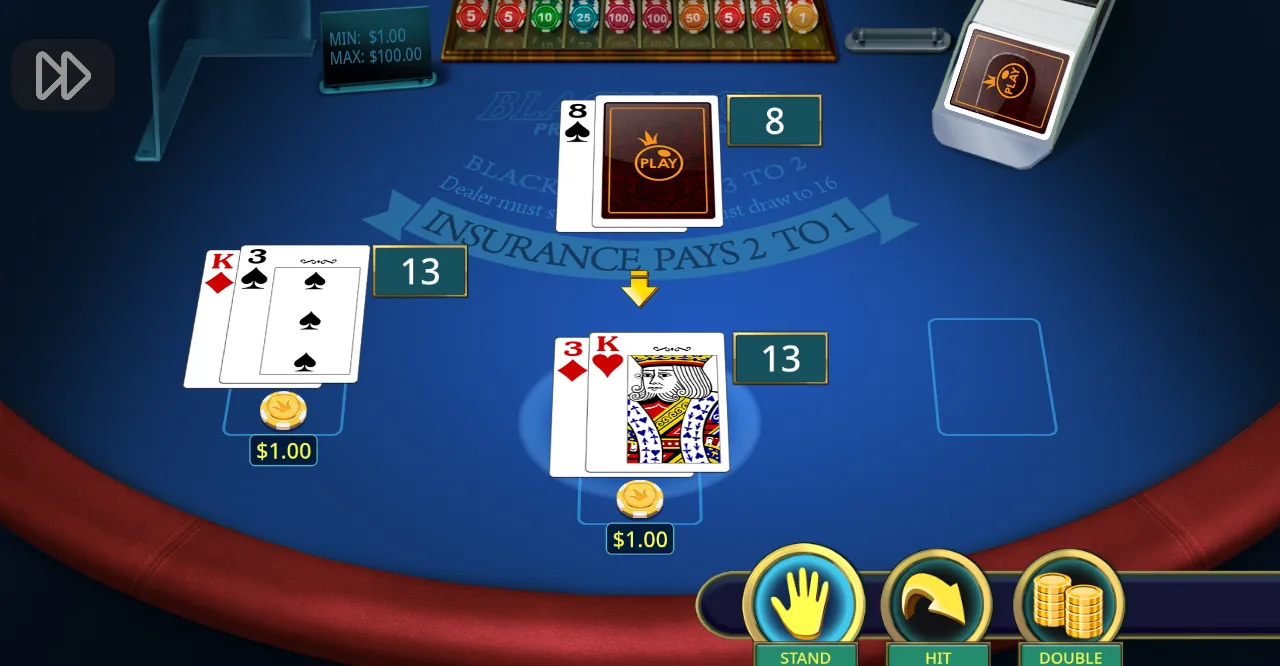
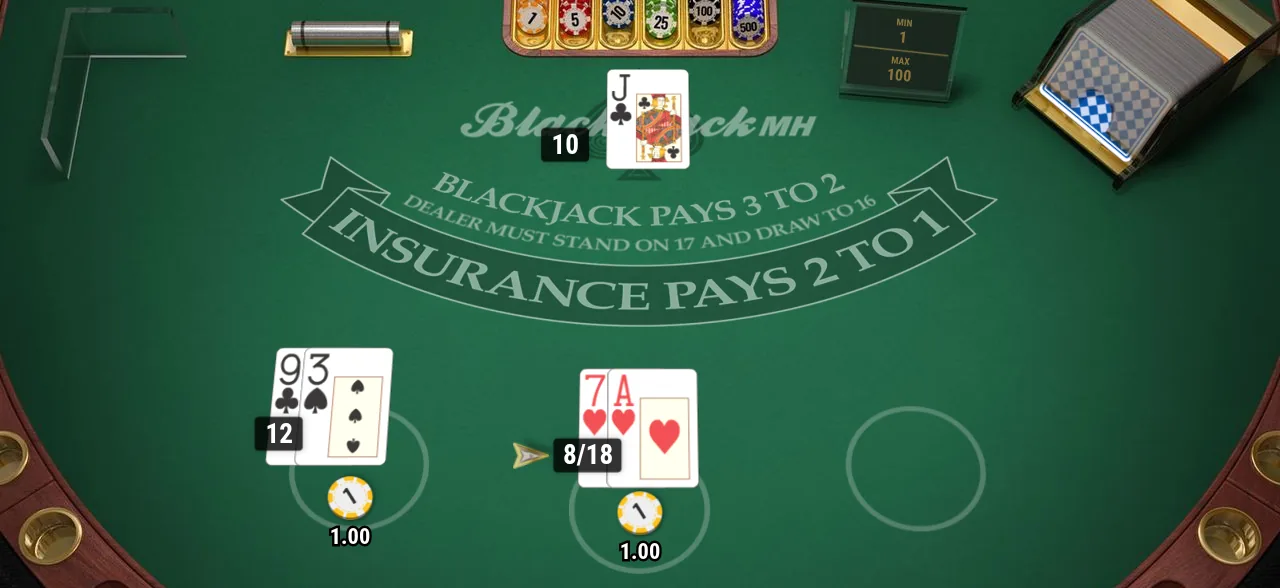
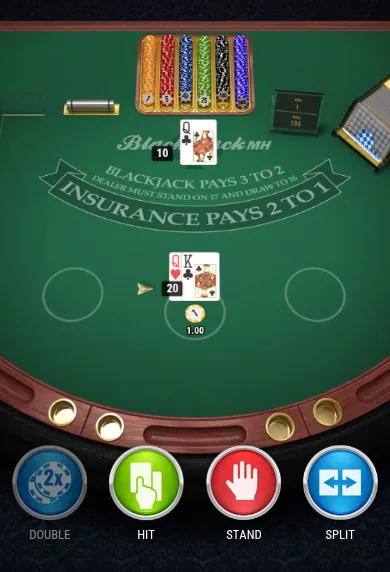
Screenshots from the free demo versions on the studios’ own websites, taken on 13 October 2026. The play-money status bar of each game has been cropped off.
Is online blackjack legal in Canada?
It depends on your province. Under the Criminal Code only a provincial government can conduct and manage online gambling, so each province decides who may offer casino games such as blackjack. Ontario has run an open market of registered private operators since 4 April 2022, and Alberta opened its own on 13 July 2026. Most other provinces offer online casino games through a single Crown platform, and the territories have no online casino platform. Our guide Are online casinos legal in Canada? covers each province, its regulator and its minimum age.
Frequently asked questions
Play within your limits
Blackjack is a game of chance, and the house edge applies to every hand, with or without basic strategy. Set a time and money limit before you start and treat any spend as the cost of entertainment. 19+ (18+ in Alberta, Manitoba and Quebec). Free, confidential help: ConnexOntario 1-866-531-2600, and every province’s helpline is on our responsible gambling page.