Live Casino Game Shows in Canada
Live game shows put a host, a giant wheel or a ball machine and random multipliers into one studio stream. This guide shows what decides each result, why every bet spot has its own house edge and why multipliers make results swing more. Spin the made-up wheel to see how a show’s main result is drawn.
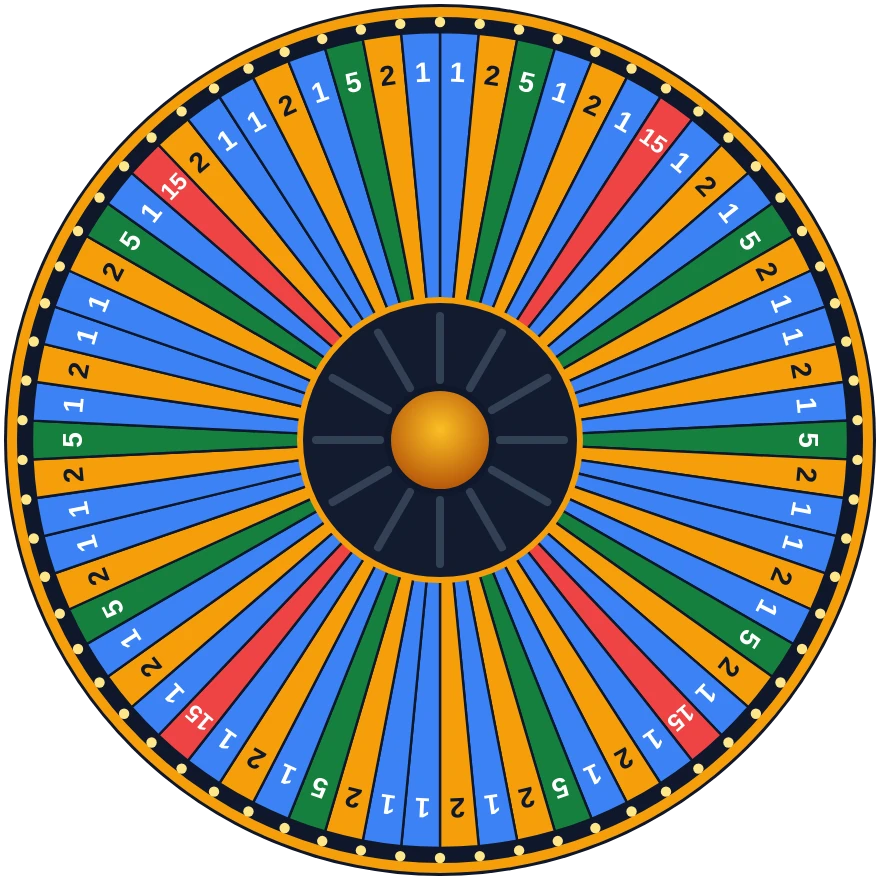 Pointer
- 1 31 segments
- 2 21 segments
- 5 10 segments
- 15 4 segments
A made-up wheel of 66 segments, not a real game. No bets and no money: each stop is drawn at random and is independent of the one before.
- 54 segments on the big wheels of Crazy Time, Dream Catcher and Monopoly Live
- 1 in 6 Crazy Time spins land on a feature round segment, according to Evolution
- 96.08% Crazy Time’s highest published RTP; its other bets return as little as 94.41%
How a game show round works
A live game show is a casino game dressed as TV entertainment. Underneath, every round follows the same order: you pick the spots you think the wheel, dice or balls will land on, the host starts the draw, and each bet is settled at fixed odds, sometimes multiplied by a random multiplier.
Bets open
A countdown starts for everyone watching. You place chips on the spots of the betting grid: a number on the wheel, a dice total or a feature round segment. Each spot is a separate bet with its own payout.
Multipliers are drawn
In many shows a separate random draw attaches multipliers to one or more spots once betting closes. They appear on screen before the result is known and apply only if the main result lands on that spot.
The host starts the draw
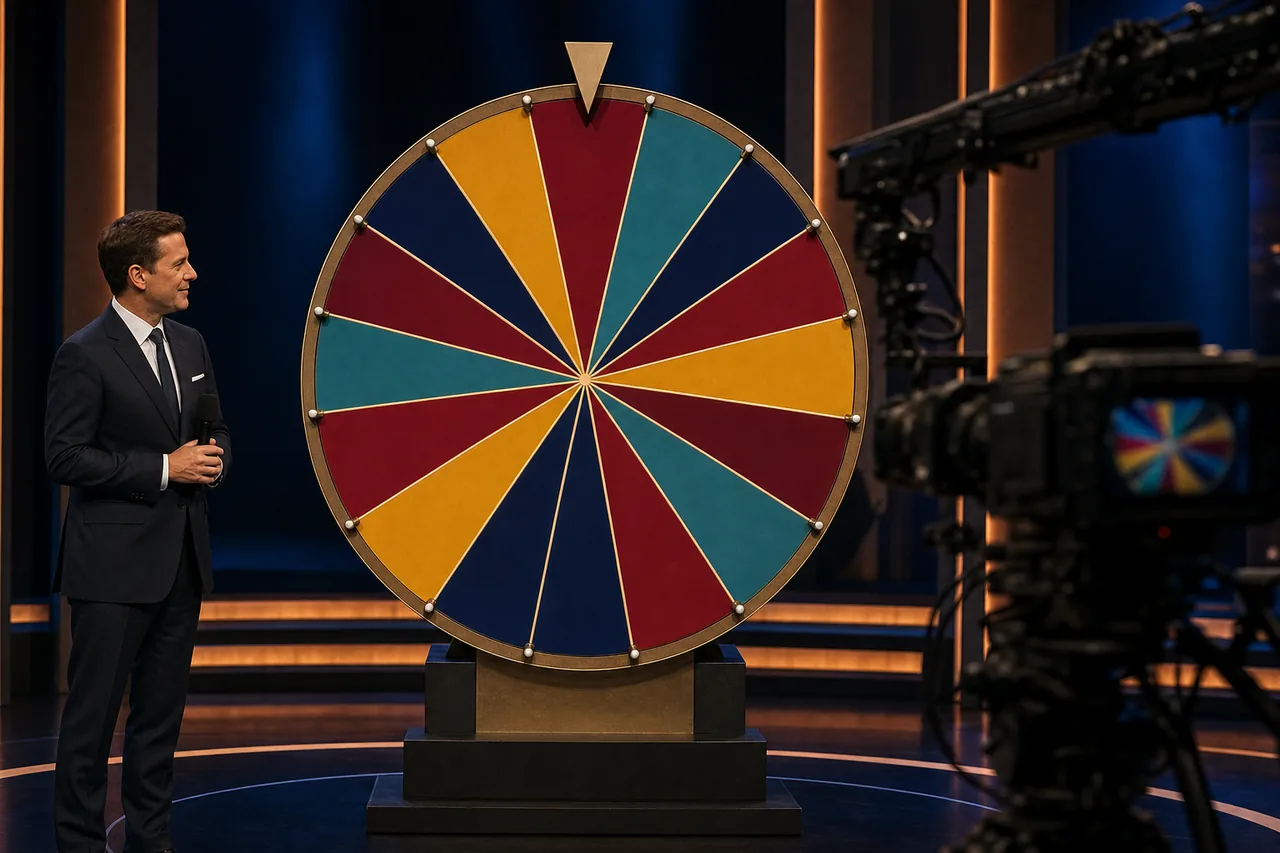
The host spins the wheel by hand, sets off the dice or the ball machine. On a big wheel, pegs between the segments slow it down and a pointer at the top marks the segment where it stops.
The result is recorded
The game system records the segment, dice or balls and shows the result on screen. The host announces it, but the recorded result settles the bets.
A feature round, if the wheel lands on one
Some segments start a feature round: a second wheel, a coin flip, a board or a grid of hidden multipliers. Only players with a bet on that segment take part; everyone else watches.
Bets are settled
Bets on the spot that came up are paid at its fixed odds, multiplied if a multiplier landed there, and every other bet is lost. The result joins the history board and the next countdown begins.
Hosts and the studio
A game show studio is built for TV-style entertainment, but the people on screen have no influence on the result. Three parts run every round.
- 1
The host
A presenter, not a dealer. The host keeps the show moving, spins the wheel or starts the draw, announces results and reads out chat messages.
- 2
The set
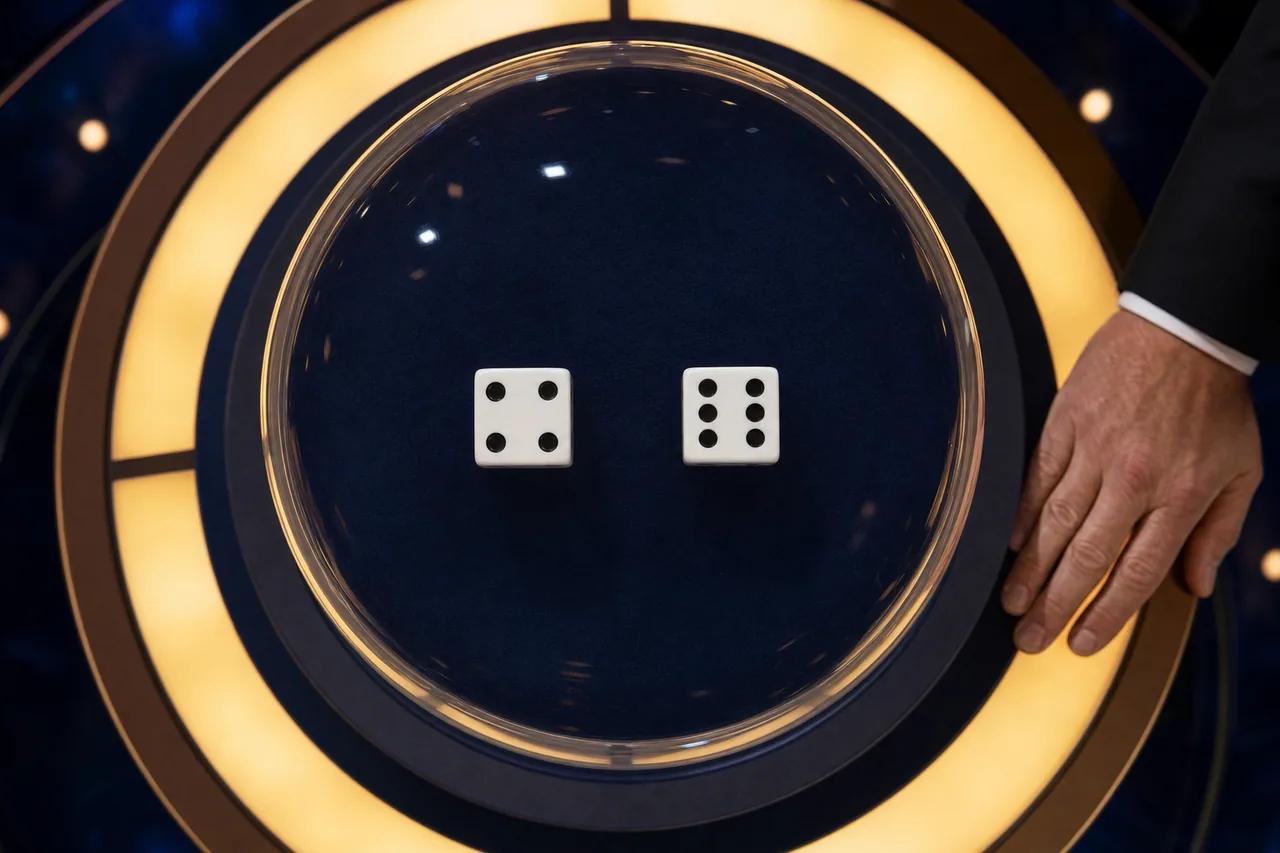
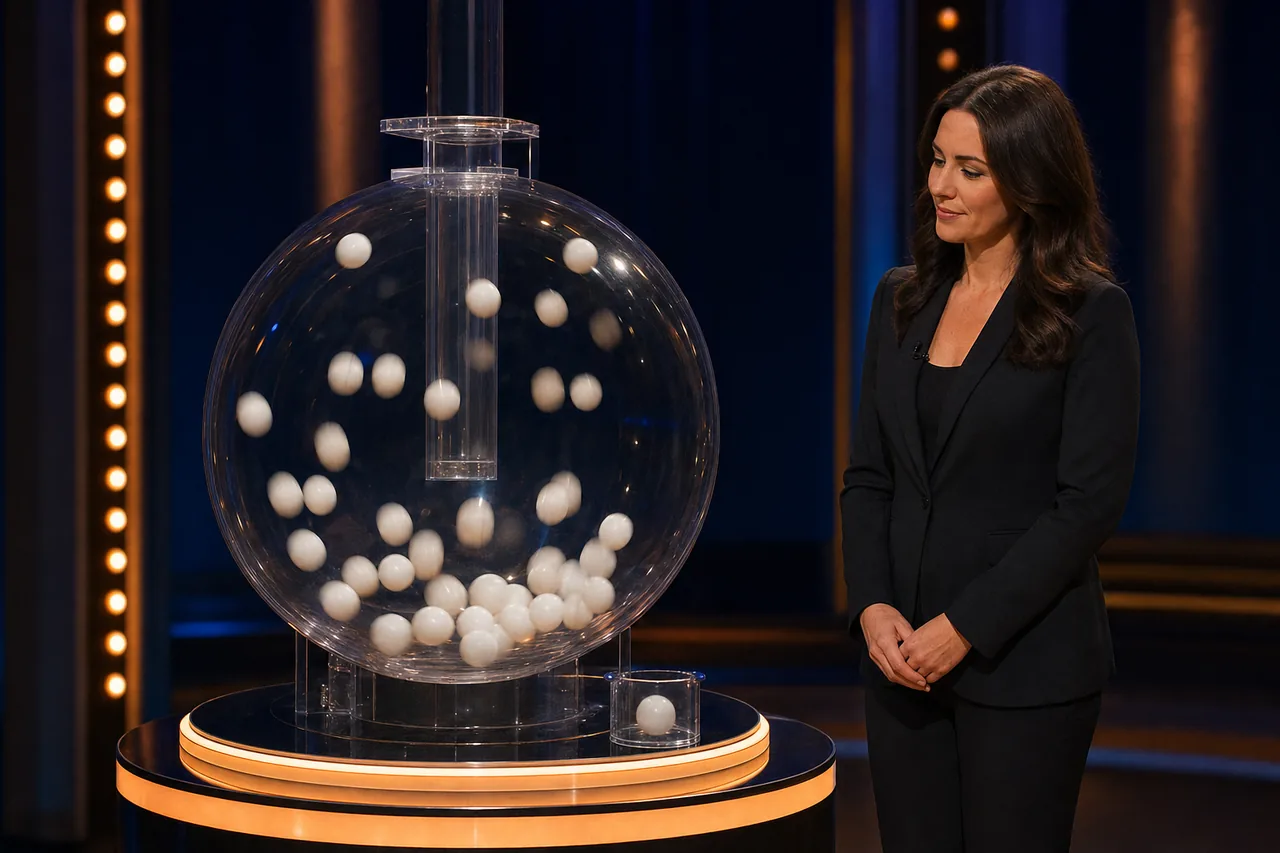
A large vertical wheel, a dice dome or a ball machine sits at the centre, with lighting and several cameras around it. Much of what you see in a feature round, such as a board or a hidden-multiplier grid, is computer graphics laid over the video.
- 3
The game system
Software accepts the bets, closes betting for everyone at the same moment, runs the random draws for multipliers where a show uses them, records each result and settles the bets automatically.
Inside a game show studio
Live game shows have no play-money version, so these are AI-generated illustrations of typical studio scenes, not pictures of any real show. Real studios differ in design, but the equipment and the order of a round are the same.


The math of a big wheel
On a big wheel each spot pays its number to 1, but the number of segments behind it is set by the game designer. That gap decides the house edge, and it is different for every spot. Explore it on the made-up wheel from the top of the page: 66 segments, 31 marked 1, 21 marked 2, 10 marked 5 and 4 marked 15.
Pick a segment
4 of the 66 segments are marked 15, so it comes up about once every 16.5 spins. A payout with no house edge would be 15.5 to 1. The wheel pays 15 to 1, so over time it returns 96.97% of what is bet on 15 and keeps 3.03%: C$0.30 on average for every C$10 bet.
Why the edges differ: payouts are round numbers and segment counts are whole numbers, so the gap between the fair payout and the real one lands differently on each spot. The 5 would need 11 segments to be fair at 5 to 1; it has 10, which leaves the largest edge on this wheel. Real shows work the same way, which is why their help screens list a separate RTP for every spot.
Add random multipliers to the 15
Suppose the game now attaches a random multiplier to some of the rounds where this segment comes up. To keep the same RTP, the regular payout has to drop: the money for the multiplied payouts comes out of every ordinary one.
The average stays the same, but more of it comes from rare, larger payouts: 9 in 10 hits on 15 pay less than before, and one round’s result spreads about 1.7 times as widely.
Paytables use round figures. Rounded down to 7 to 1, this segment would return 86.67% instead of 96.97%.
Illustration only: a made-up wheel and a simplified multiplier rule, with no bets and no money. Real shows draw multipliers differently, but the trade-off is the same.
Why multipliers make results swing more
Multipliers do not add value to a game. They move it: from the regular payouts that come up often to rare, large ones. The long-run average cost stays where the RTP puts it, while short sessions spread much further from that average in both directions.
- Same average, different shape
A spot with multipliers pays less on most hits than a spot without them. The rare multiplied payout brings the average back up to the published RTP; it does not raise it.
- Long gaps are normal
In the example above a multiplied 15 comes up about once in 165 spins on average, and gaps of several hundred spins happen. A gap does not make the next multiplier more likely.
- Feature rounds need their own bet
You only take part in a feature round with a bet on that segment, and each of those bets carries its own edge. Covering several spots every round multiplies the amount bet per round.
- History boards are a record
The board of recent results shows what happened, not what comes next. Each spin of the wheel is independent of the ones before it.
Game show types compared
Most live game shows are built on one of five formats. Choose a format to see what decides the result, where multipliers come from and the published RTP where a source exists, then draw a random result to see the mechanism at work.
Big wheel shows
The classic format: a host spins a large vertical wheel and you bet on the segment it will stop on. Number segments pay their number to 1; other segments start feature rounds or add multipliers.
Draw a random stop from the made-up wheel at the top of the page.
Dice shows
Real dice are shaken or dropped inside a clear dome, and you bet on the total or on particular combinations. It works like a studio version of sic bo or craps.
Roll two dice to see a random total.
Board-game shows
A big wheel with a board game on top. Some wheel segments send an animated token around a board, and the squares it lands on add payouts for players who bet on that segment.
- 1
- 2
- 3
- 4
- 5
- 6
- 7
- 8
- 9
- 10
- 11
- 12
Roll two dice to move the token from square 1.
Coin flip shows
A coin with two coloured sides is flipped in the studio. It appears as a feature round inside wheel shows and as a stand-alone show.
Flip the coin to see which side lands up.
Ball-draw shows
A lottery-style machine releases numbered balls one by one. You hold cards or pick numbers, and the drawn balls are marked off as they come out, much like bingo.
Draw five balls from a made-up drum of 60.
The draws are illustrations only, with no bets and no money. Real shows use their own wheels, boards and drums; the help screen of each game lists the exact rules and the RTP for every bet.
What real game show bets cost
The RTP differs from one bet spot to the next, even inside the same show. Move the slider to see the average cost of each spot over the same total amount bet.
Average cost by bet spot
- Dream Catcher, bet on 10 RTP 96.58%, 3.42% house edge C$17.10
- Crazy Time, highest-returning bet RTP 96.08%, 3.92% house edge C$19.60
- Crazy Time, lowest-returning bet RTP 94.41%, 5.59% house edge C$27.95
- Dream Catcher, bet on 40 RTP 90.81%, 9.19% house edge C$45.95
The cost is the long-run average the game keeps, not a prediction: a single session can end far above or below it. Crazy Time’s range is published by its provider, Evolution. Dream Catcher’s figures are calculated from its wheel layout (23 segments marked 1, 15 marked 2, 7 marked 5, 4 marked 10, 2 marked 20, 1 marked 40 and two multiplier segments); the 96.58% for the 10 is the figure usually quoted for the game. RTPs can differ between versions, so check the help screen.
Live or RNG: which parts are which
A game show mixes physical equipment with software. Knowing which part is which explains why some results can be shown as a physical stop and others only as graphics.
| Part of the show | How it is usually decided | Where to check |
|---|---|---|
| Main wheel, dice or balls | Physical equipment, spun, rolled or released in the studio and recorded by the game system | The game rules in the help screen |
| Random multipliers | In many shows a random number generator picks the values and the spots before the main result | The help screen: multiplier range and how multipliers combine |
| Feature rounds | Some use physical devices, such as a second wheel or a coin; others are animations driven by random draws | The rules of each feature round |
| On-screen wheels | Some newer shows use a digital wheel that a host presents, so the main result is drawn by software too | The game description |
| Play-money demo | None: live shows run for real in every round | RNG versions of some formats offer demos |
- Both are tested
Physical equipment and the random number generators behind multipliers are both checked by independent test labs before a game can be offered in a regulated province.
- Neither has a memory
A physical wheel and a random number generator both produce independent results. Recent history, hot spots or long gaps say nothing about the next round.
What to check in the help screen
Every game show has a help or rules screen behind the “?” or “i” button. It is the only place with the exact numbers for the version you are watching.
- The RTP for each spot. Game shows list a separate return for every bet. The house edge is 100% minus that figure.
- The segment list. How many segments of each kind the wheel has. That count, against the payout, sets the edge of each spot.
- How multipliers work. Which spots they can land on, their range, and whether two multipliers in a row are added or multiplied.
- Who plays feature rounds. Only bets on that segment take part. Check what happens to the bet itself during the feature round.
- The maximum payout. Many shows cap the total paid out in one round, and the rules state the cap.
- Errors and disconnections. What happens to bets if a spin or draw is declared invalid, or if your connection drops during a round.
Are live game shows legal in Canada?
It depends on your province. Under the Criminal Code only a provincial government can conduct and manage online gambling, so each province decides who may offer casino games, live game shows included. Ontario has run an open market of registered private operators since 4 April 2022, and Alberta opened its own on 13 July 2026. Most other provinces offer online casino games through a single Crown platform, and the territories have no online casino platform. Our guide Are online casinos legal in Canada? covers each province, its regulator and its minimum age.
Frequently asked questions
Play within your limits
Game show rounds come quickly and multipliers make results swing widely, so the amount bet can grow faster than it feels. Set a time and money limit before you start and treat any spend as the cost of entertainment. 19+ (18+ in Alberta, Manitoba and Quebec). Free, confidential help: ConnexOntario 1-866-531-2600, and every province’s helpline is on our responsible gambling page.