Live Dealer Casino Games in Canada
How a live studio works, from the cameras to the scanners that read each card and wheel, what one round looks like and what live blackjack, roulette, baccarat and game shows cost per hour. Tap the numbered points on the table to see what each part of the screen does.
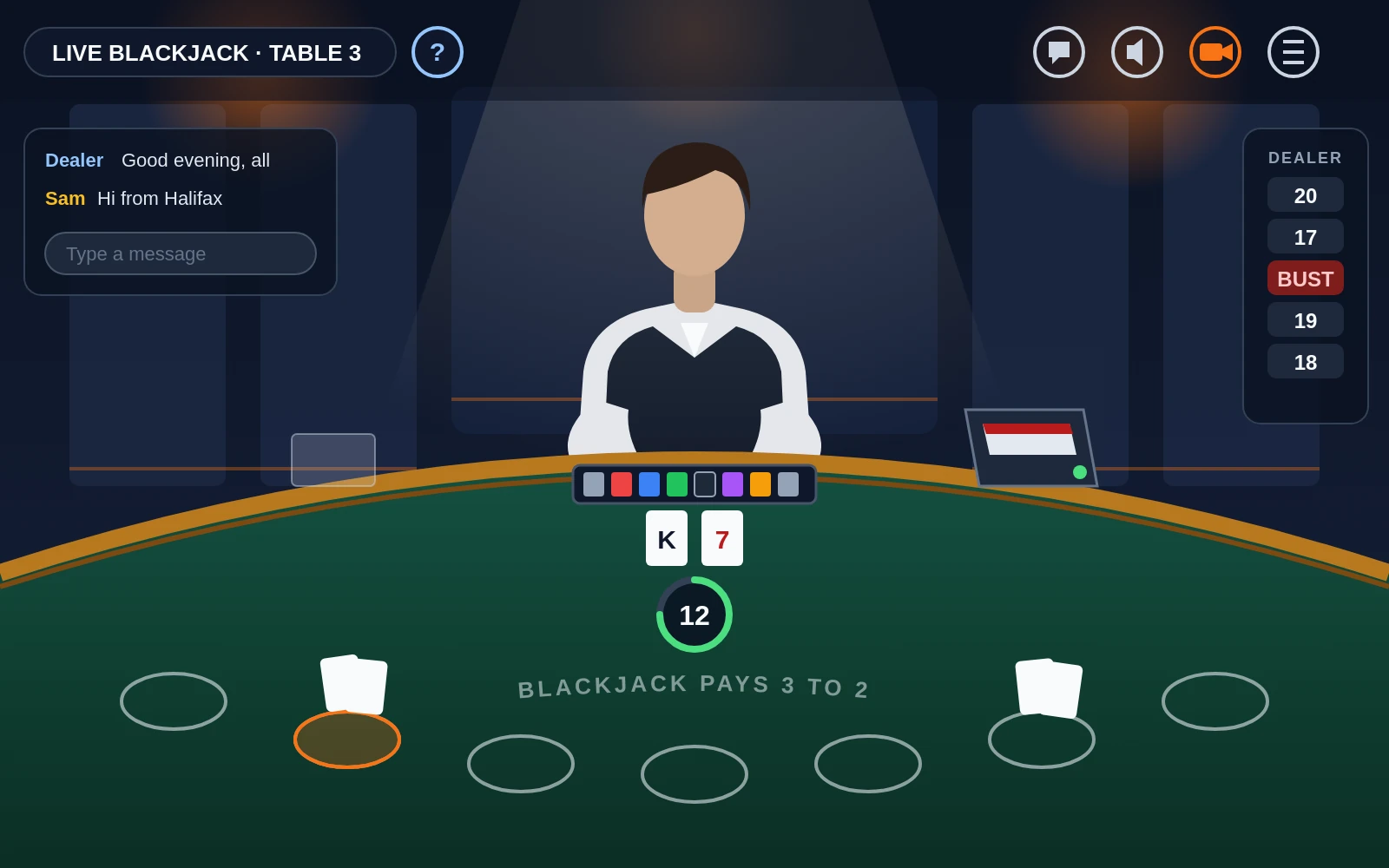
- 1. The dealer
A trained croupier deals the cards or spins the wheel in a studio. Dealers follow fixed procedures, cannot see or hear you, and have no say in the result: they read your chat messages and answer out loud.
- 2. The card shoe
Cards come from a shoe of several shuffled decks. In live studios the shoe or the table reads each card electronically as it is dealt, so the game knows every card before the dealer announces it.
- 3. The betting timer
Every round opens with a countdown for bets. When it reaches zero the layout locks for everyone at the table, and late bets are not accepted. Decisions such as hit or stand have their own timer.
- 4. The bet layout
You bet by tapping a digital layout drawn over the video: seats at blackjack, the number grid at roulette, Player, Banker and Tie at baccarat. Your seat or spot is highlighted; the chips on the felt are part of the set.
- 5. The results history
A column or grid shows the last results: dealer totals, roulette numbers or baccarat “roads”. It is a record, not a forecast. Shuffled cards and a spinning wheel have no memory of earlier rounds.
- 6. The chat
Players can type to the dealer and to each other. The chat is moderated: rude or abusive messages lead to a warning, and repeated abuse can close your session.
- 7. The camera switch
Studios film each table with several cameras. The view buttons switch between the wide shot, close-ups of the cards or the wheel, and sound and video quality settings.
- 8. The help screen
The “?” button opens the rules, the payouts, the table limits and the return to player (RTP) for this exact table. It is the place to check before your first bet.
Illustration of a typical live blackjack screen, not a real game or studio.
- 7 seats at a classic live blackjack table; “infinite” tables have no seat limit
- 25 s per round at Evolution’s Speed Roulette, about half a standard live round
- 1.06% house edge on the baccarat Banker bet with 5% commission
How live dealer games work
A live dealer game is a real table game played in a studio and streamed to your phone or computer. The cards, wheel or dice are physical, a dealer runs the round, and you bet through an on-screen layout. The house edge comes from the rules of the game, exactly as at an RNG table.
- 1
The studio
Live tables are built in dedicated studios, and a few are filmed on land-based casino floors. Each table has its own set, lighting and dealers working in shifts, so the bigger studios run tables around the clock.
- 2
The stream
Several cameras film every table. The video is encoded and streamed in HD to your device with a short delay, and the game adjusts the quality to your connection. You switch between wide shots and close-ups with the camera button.
- 3
Reading the result
The result is captured by machines, not typed in by the dealer. Card readers identify each card as it leaves the shoe, sensors in the wheel register the pocket, and optical character recognition (OCR) turns the camera picture into data. The game server settles bets from that data.
One live round, step by step
Live tables run on a clock that is the same for every player at the table. Run a round or step through it to see what happens at each stage. Pick roulette or baccarat; the results are random and shown for illustration only.
1. Bets open
A countdown starts for everyone at the table, usually a few seconds to about twenty. You place chips on the digital layout and can change them until the timer ends.
2. Bets close
At zero the system locks the layout and the dealer is cleared to continue. A bet that reaches the server after the close is rejected, whatever the dealer is doing on screen.
3. Spin or deal
The dealer spins the wheel and launches the ball, or deals cards from the shoe in a fixed order. At baccarat a third card is drawn only when the fixed drawing rules say so.
4. Result read
Sensors in the wheel or the card reader in the shoe pass the result to the game server, which shows it on screen. The dealer announces it, but the recorded data decides.
5. Bets settled
Bets that match the result are paid at the table’s fixed odds and the rest are collected, automatically and for all players at once. The result joins the history and the next countdown begins.
Illustration only: no bets, no money and no balance. The countdown is shortened, and each result is drawn at random, independent of the one before.
RNG or live dealer
Most casino table games come in both forms. The rules and the payouts can be identical; what changes is where the result comes from and how fast the game runs.
| RNG table games | Live dealer games | |
|---|---|---|
| Where the result comes from | A random number generator (software) | Physical cards, a wheel or dice, read by scanners and sensors |
| Who starts a round | You, when you press deal or spin | The table clock, for all players together |
| Pace | As fast as you play | Fixed round length for the table |
| Play-money demo | Usually available | Not available: every round is dealt for real |
| Minimum bet | Usually lower | Usually higher, since a dealer and studio run each table |
| House edge | Set by the rules | Set by the rules: the same rules give the same edge |
| Other players | None | Shared table and chat |
- Same math in both
A live European roulette wheel has the same 2.70% edge as an RNG one, and a live baccarat Banker bet the same 1.06%. Multipliers, fees and side rules are what change the figure.
- No memory in either
Each round is independent. A long run of Banker results or red numbers on the history board makes the next result no more and no less likely.
Compare the main live games
Choose a game to see its house edge, its pace and what decides the result. The calculator underneath shows why pace matters: the edge applies to every round, so more rounds per hour means more money bet and a higher average cost.
Live blackjack
Live roulette
Live baccarat
Live game shows
What the pace does to the cost
- Blackjack 0.5% edge, 50 rounds an hour C$2.50
- Roulette, single zero 2.70% edge, 60 rounds an hour C$16.22
- Baccarat, Banker bet 1.06% edge, 70 rounds an hour C$7.42
- Game show, lowest-edge spot 3.92% edge, 40 rounds an hour C$15.68
The cost is the long-run average the game keeps: bet × rounds × house edge. It is not a prediction, and a single hour can end well above or below it. The bars compare the four games at your bet size: the selected game uses your rounds per hour, the others their typical pace.
The main live game types
A live lobby is grouped by game. Studios add their own names, themes and side bets, but almost every table is built on one of these six.
Classic tables seat seven players, with a “bet behind” option on other players’ hands when every seat is taken. “Infinite” versions deal one shared starting hand to an unlimited number of players, who each make their own decisions.
European, French and American wheels, plus speed tables, automatic wheels without a dealer and multiplier versions. The house edge is the same as on the matching RNG wheel unless the game changes the payouts.
Player, Banker and Tie bets with fixed drawing rules. Variants include speed tables, no-commission tables (where a Banker 6 pays half) and “squeeze” tables where the dealer reveals cards slowly.
Studio entertainment formats with a host: big wheels, ball draws and dice, often with random multipliers and separate feature rounds. The rules and the RTP differ from show to show.
Casino Hold’em, Three Card Poker and similar games are played against the dealer’s hand, not against other players. The paytable and the qualifying hand rules set the edge.
Game shows and multipliers
Game shows look different from table games, but the math works the same way. When a show adds random multipliers, the money for them comes from the regular payouts: the standard result on a spot pays less than it otherwise would, and the occasional multiplied result brings the average back up to the published RTP. The same applies to multiplier versions of roulette and baccarat, where a straight-up number or a standard Banker bet pays less, or an extra fee is added to each bet.
Etiquette and chat rules
A live table is shared with the dealer and other players. Each studio publishes its own chat rules, and they follow the same basic lines.
- The dealer only sees text
Dealers cannot see or hear you. They read the chat and reply out loud, and they cannot give betting advice or change a result.
- Keep the chat polite
The chat is monitored. Abusive, offensive or spam messages lead to a warning, and the chat or your game session can be closed if they continue.
- No personal details
Do not share your full name, contact details or account information in the chat. Questions about your account go to the casino’s support team, not the dealer.
- Decide within the timer
At blackjack the other players wait for your choice. If the decision timer runs out, the game applies a default action, which the help screen describes.
Studio licensing and testing
Live games pass through several layers of oversight before they reach a Canadian lobby. The details depend on where the studio is and which province the casino serves.
Studios operate under a licence or approval from the regulator of the country or state where they are located, which sets rules for staff, security and how equipment is handled.
In provinces with a regulated market, the company that supplies the games has to be registered with or approved by the provincial regulator before its tables can be offered. Crown platforms choose and contract their own suppliers.
Test labs check the game software, the equipment that reads results and the studio procedures, such as shuffling and wheel checks, against the technical standards of each market.
What to check in the help screen
Every live table has a help or rules screen behind the “?” or “i” button. Two tables with the same name can have different rules, so it is worth reading for each new table.
- The RTP. The return to player for each bet type. The house edge is 100% minus the RTP.
- The exact rules. Number of decks, whether the dealer hits soft 17, blackjack paying 3 to 2, the Banker commission or la partage.
- The table limits. The minimum and maximum per bet, which can differ between spots on the same table.
- Fees and side bets. Some multiplier tables add a fee to each bet, and side bets usually carry a higher edge than the main bet.
- Default actions. What the game does when your decision timer runs out.
- Disconnections. What happens to a bet that is already placed if your connection drops during a round.
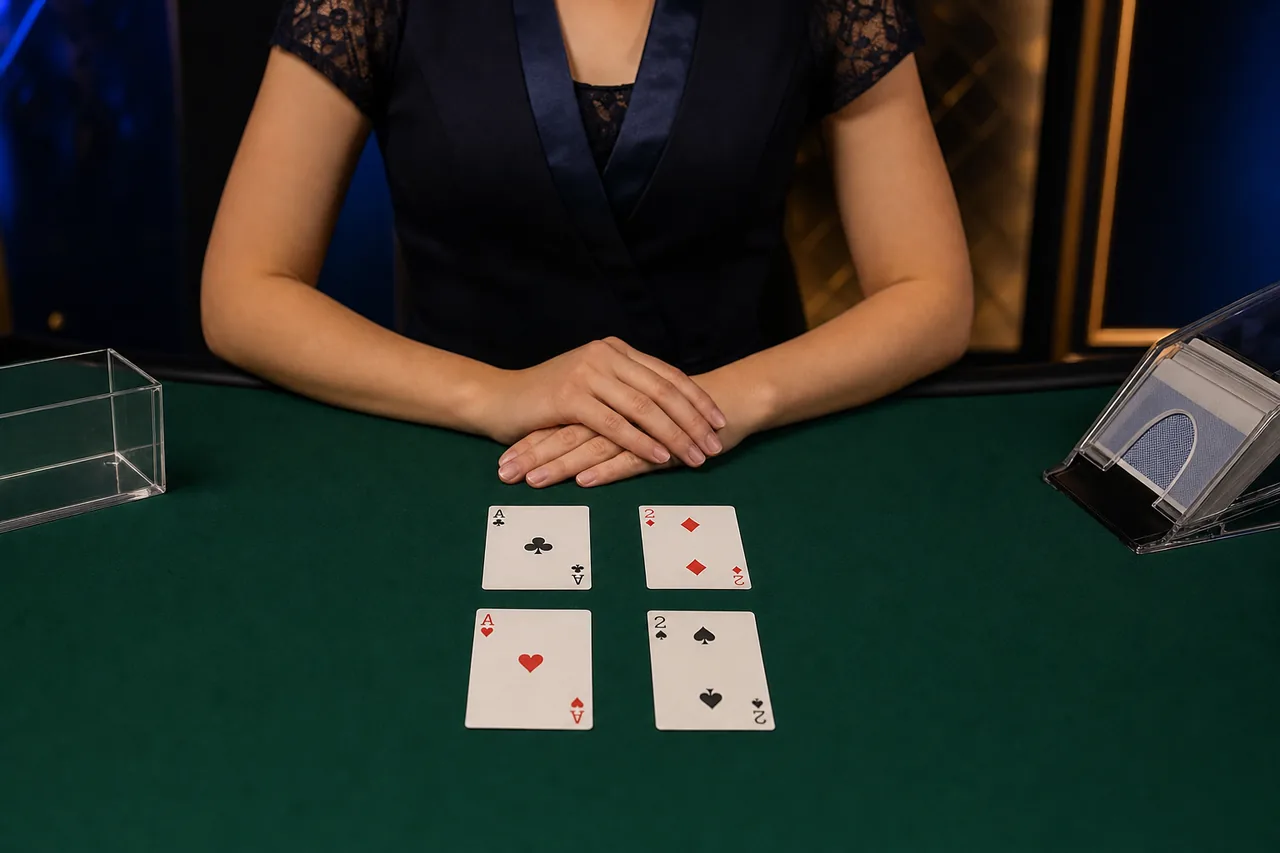
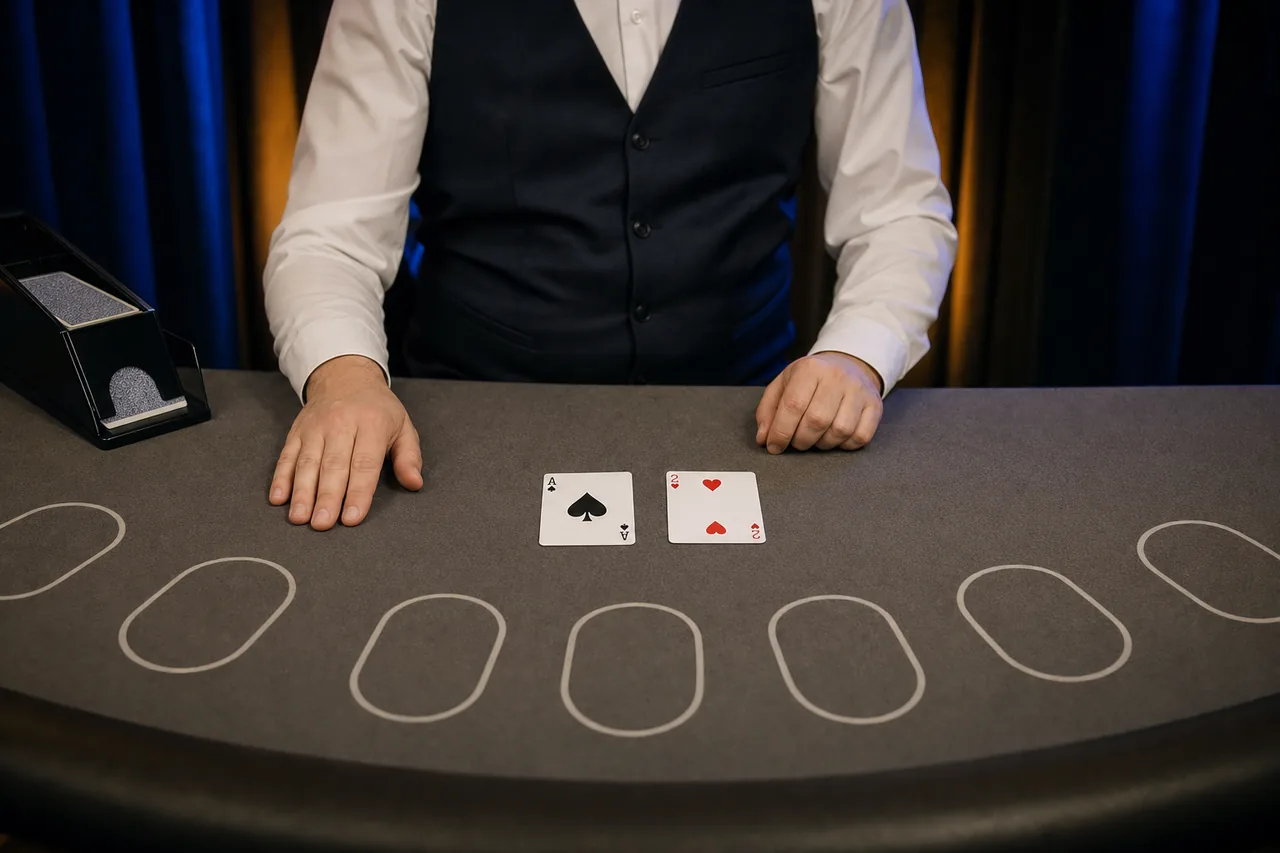
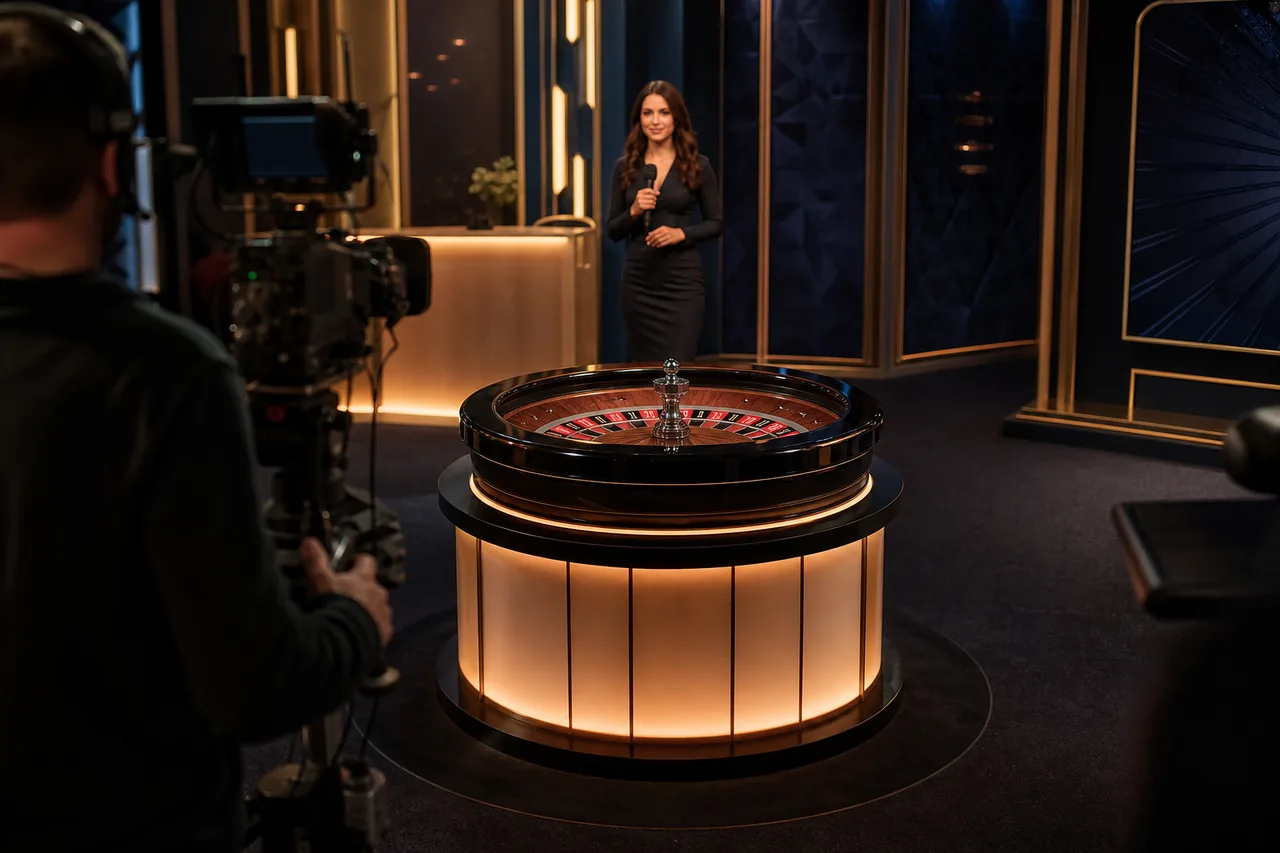
What live tables look like
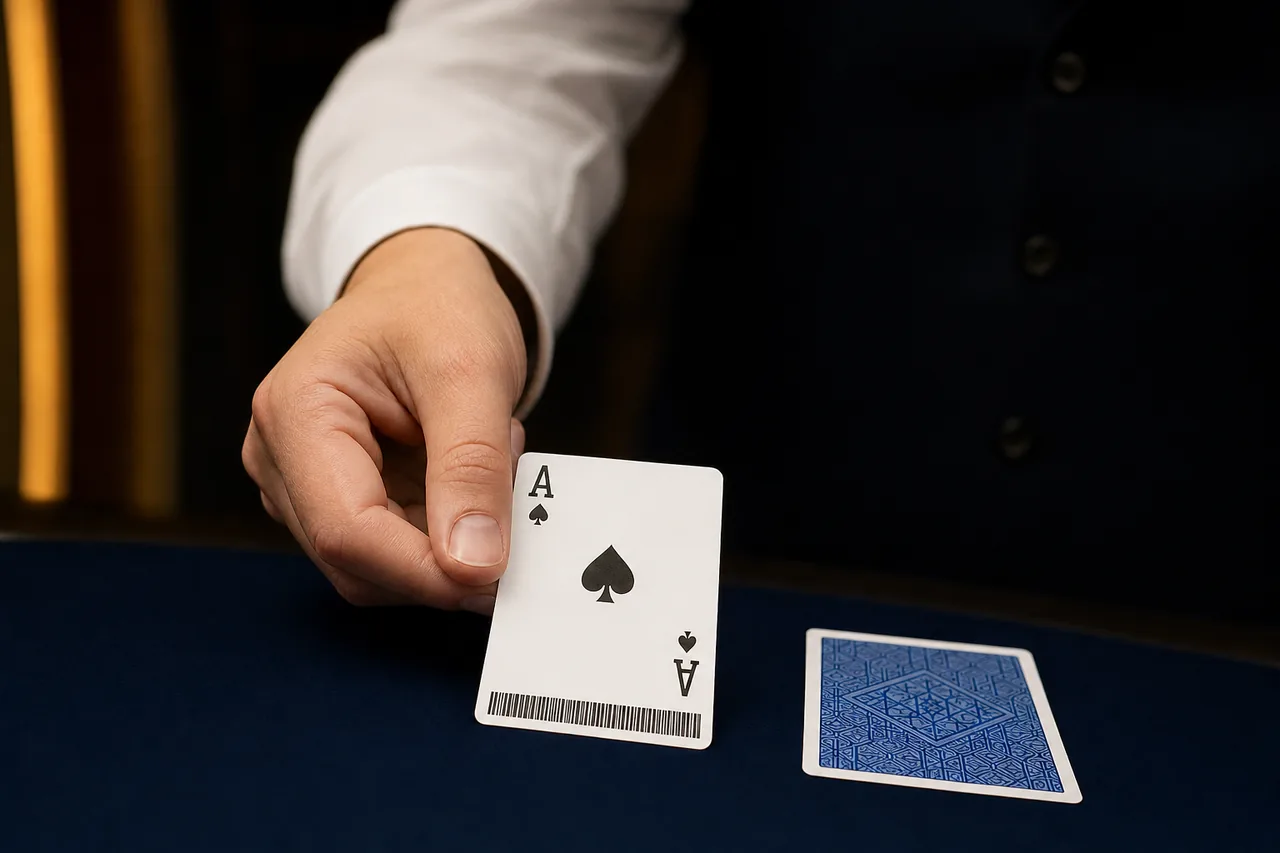
Live games have no play-money version, so these are AI-generated illustrations of typical live studio tables. Real studios differ in layout and decor, but the parts and the order of a round are the same.

Are live dealer casinos legal in Canada?
It depends on your province. Under the Criminal Code only a provincial government can conduct and manage online gambling, so each province decides who may offer casino games, live dealer tables included. Ontario has run an open market of registered private operators since 4 April 2022, and Alberta opened its own on 13 July 2026. Most other provinces offer online casino games through a single Crown platform, and the territories have no online casino platform. Our guide Are online casinos legal in Canada? covers each province, its regulator and its minimum age.
Frequently asked questions
Play within your limits
Live tables run on a clock, and the house edge applies to every round. Set a time and money limit before you start and treat any spend as the cost of entertainment. 19+ (18+ in Alberta, Manitoba and Quebec). Free, confidential help: ConnexOntario 1-866-531-2600, and every province’s helpline is on our responsible gambling page.